
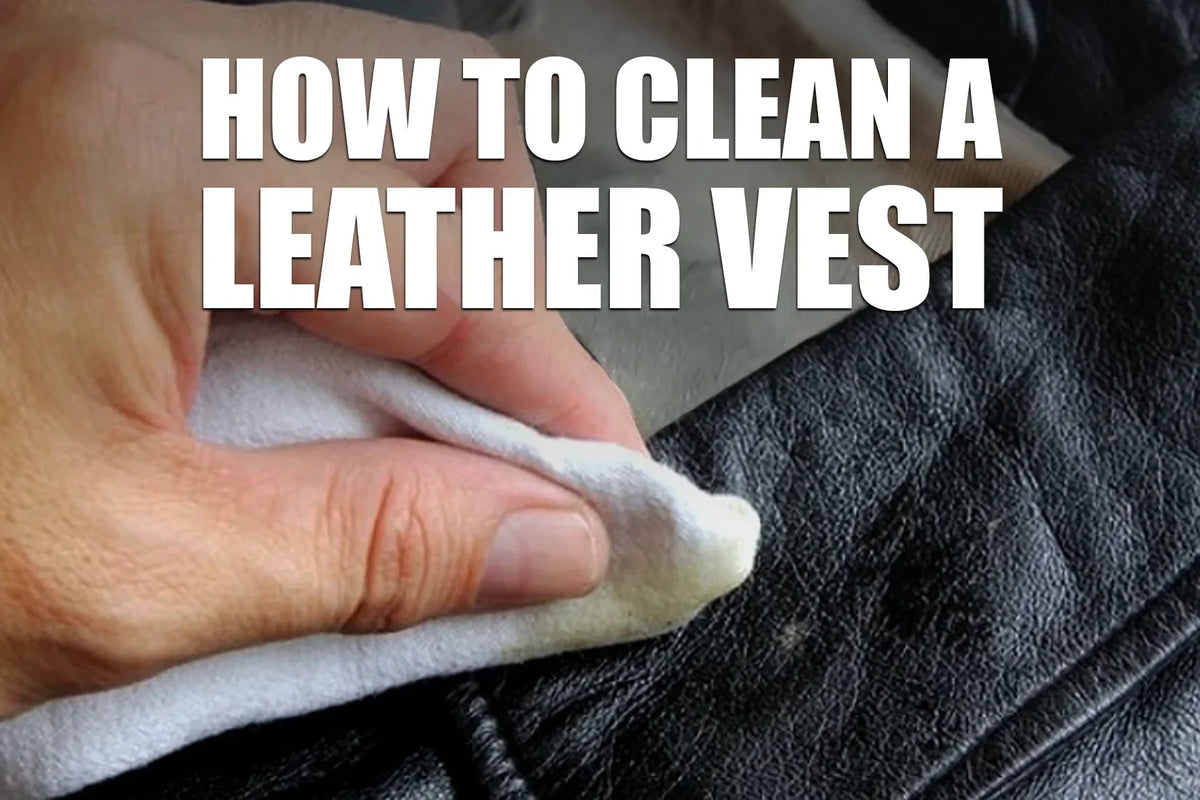
To clean a leather vest, brush off the dust, wipe it in sections with a soft cloth dampened in distilled water and a few drops of mild soap, rinse with a second damp cloth, let it air dry away from heat and direct sunlight, then work in a leather conditioner. Never machine wash it, and use a dry brush and suede eraser instead of water if the vest is suede or nubuck. A full clean every three to six months keeps a riding vest supple, and spot cleaning handles everything in between.
The rest of this guide explains each step, the supplies worth buying, how to treat grease, sweat, water marks and mildew, and how to store your vest so it stays clean longer. The method is the same whether you ride every weekend or only pull your vest out for rallies. If you also own a jacket, our guide on how to clean a leather jacket applies the same principles to larger panels and sleeves.
Know Your Leather Before You Clean It
Different leathers react differently to water and cleaners, so identify the material first. Full-grain and top-grain leather, the most common choices for motorcycle vests, handle careful damp cleaning and conditioning well. Genuine leather and bonded leather are thinner or more heavily processed, so they dry out and peel faster if you over-wet them. Suede and nubuck have a brushed, napped surface that stains easily with water and needs a dry cleaning method. Perforated leather and moto mesh panels add another wrinkle, since dirt collects in the holes and moisture can sit in the weave.
Check the care label inside the vest before you start. It usually names the leather type and warns against certain treatments. Also note any removable lining, armor inserts, buckles, snaps, zippers or sewn-on patches, because each one changes how much moisture is safe.
What You Need
You do not need a shelf of specialty products. A few soft microfiber cloths, a soft-bristle or horsehair brush, distilled water and a mild soap such as unscented baby shampoo or gentle castile soap will handle most jobs. Saddle soap or a pH-balanced leather cleaner works for heavier grime, and a quality leather conditioner (lanolin, beeswax or a cream-based formula) finishes the job. Distilled water is worth using because tap water can leave mineral spots on the surface. For stains, keep cornstarch and cotton swabs on hand as well.
How to Clean a Leather Vest, Step by Step
Step 1: Prepare the vest and brush off dry dirt
Lay the vest on a clean towel and take out any removable armor inserts or lining. Wipe it down with a dry microfiber cloth, then use the soft brush along seams, stitching, the collar, armholes and around zippers, snaps and buckles, where road grit and lint settle. Use the brush tip or a cotton swab inside perforations. Removing dry dirt first keeps it from grinding into the grain once you add moisture. If your vest has embroidered patches, brush around them gently and avoid pulling on the thread. If you are planning to add new ones, our guide to sewing patches on a leather vest is easier to follow once the leather is clean.
Step 2: Mix a mild cleaning solution
Add a few drops of mild soap to a bowl of lukewarm distilled water. Dip a microfiber cloth into it and wring it out until it feels barely damp. If you prefer saddle soap or a leather cleaner, follow the label and apply a small amount to a damp cloth rather than straight onto the vest.
Step 3: Test a hidden spot
Try the solution on an inside hem or under the armhole and let it dry. If color transfers to the cloth or the leather turns dark or stiff, switch to a gentler product. This one minute check prevents most cleaning mistakes, especially on dyed, distressed or waxed leather.
Step 4: Wipe the vest in sections
Work in small sections with light, circular strokes, starting at the top and moving down. Pay extra attention to the collar, underarms and lower front, where hands, belts and sweat do the most damage. Keep the cloth damp, not wet, and never scrub. On perforated or mesh panels, dab instead of wiping so moisture does not settle in the holes.
Step 5: Rinse away soap residue
Go over the vest again with a second cloth dampened in plain distilled water. Leftover soap can leave a dull film or streaks and can dry the leather out. Blot away surface moisture with a dry towel, and wipe metal hardware dry so it does not rust or tarnish.
Step 6: Dry it naturally
Hang the vest on a wide, padded hanger or lay it flat in a cool, shaded room with good airflow. Keep it away from radiators, hair dryers, car heaters and direct sun. Heat pulls oils out of the hide, which leads to shrinking, stiffness and cracks. Drying can take several hours to overnight, and the leather should feel completely dry before you move on.
Step 7: Condition the leather
Cleaning removes some of the natural oils, and conditioner puts them back. Once the vest is dry, work a small amount of conditioner into the leather with a clean cloth in circular motions, covering the back panel, front panels and edges. Let it absorb for about 15 minutes, then buff off the excess with a dry cloth. Use a thin coat, because too much product leaves leather sticky and attracts dust. Suede and nubuck should not get regular conditioner. Use a protector made for napped leather instead.
How to Remove Common Stains from a Leather Vest
Act quickly, blot instead of rubbing, and test any method in a hidden spot first.
Grease and oil: Sprinkle cornstarch or talcum powder over the mark and leave it for a few hours so it absorbs the oil. Brush the powder away, repeat if needed, then clean lightly with a damp cloth.
Water marks: Dampen the whole panel evenly with a barely wet cloth so the mark blends in, then let it dry naturally and condition. Wetting only the stain tends to leave a ring.
Sweat and salt: Wipe with a cloth dampened in distilled water, let the vest dry, and condition it to restore softness.
Mildew and musty smell: Wipe the surface with a cloth dampened in equal parts distilled white vinegar and water, then dry the vest in open air out of direct sun and condition it. Storing it near an open box of baking soda can help with lingering odor, as long as the powder stays off the leather.
Ink: Dab gently with a cotton swab and a tiny amount of rubbing alcohol, though alcohol can lighten dye and strip the finish. On light or heavily dyed leather, a professional is the safer choice.
What Not to Do When Cleaning Leather
Do not put a leather motorcycle vest in a washing machine or dryer. Agitation and heat shrink the hide, warp its shape and crack the surface. Avoid bleach, ammonia, acetone, glass cleaner and alcohol-based wipes, which strip color and finish. Home remedies such as olive oil, vegetable oil and baby wipes are poor substitutes for real leather care, since cooking oils can turn rancid and wipes contain chemicals that dull or dry the leather. Heavy oils like neatsfoot oil and mink oil soften leather but can darken it noticeably, so use them sparingly and only when the leather really needs them.
When to Call a Professional
Take the vest to a leather specialist rather than a standard dry cleaner if it is suede, nubuck, exotic leather, vintage, heavily stained or covered in patches you do not want to risk. Professionals use pH-balanced products and controlled methods that are hard to match at home.
How Often Should You Clean a Leather Vest?
For regular riding or daily wear, a full clean and conditioning every three to six months works well, with spot cleaning whenever a spill or mark appears. If you wear the vest only occasionally, conditioning once or twice a year is usually enough. Riders in hot, dry climates or those who often get caught in rain may need to condition more often. If the vest gets soaked, blot it, let it air dry away from heat, and condition it once it is fully dry.
How to Store a Leather Vest So It Stays Clean
Good storage cuts down on how often you need to clean. Hang the vest on a wide, padded hanger so the shoulders keep their shape, and keep it in a cool, dry closet inside a breathable cotton garment bag. Avoid plastic covers, which trap moisture and encourage mildew, and skip sunny windowsills, damp basements and hot car trunks. A quick wipe with a dry cloth after each ride removes dust and sweat before they settle in. If you like to personalize your vest, clean and condition it first, then follow our steps for attaching patches to a leather vest so the stitching goes into healthy leather.
Final Thoughts
Cleaning a leather vest comes down to a few gentle habits. Brush off dust after rides, wipe the surface with a barely damp cloth and mild soap when it needs more, dry it slowly away from heat and sunlight, and condition it so the hide stays soft. Skip the washing machine, harsh cleaners and kitchen oils, and deal with stains as soon as they happen. Do that consistently and full-grain or top-grain leather keeps its shape, color and character for years.
The same care applies whether your vest is a club style cut, a perforated summer layer or a plain everyday piece. Regular cleaning also protects the details that make a vest yours, from the stitching and hardware to the patches you have added over the miles. If a vest looks too delicate or too far gone for home care, a leather specialist is always the safer call.
At Unik International, we have been serving riders since 1985 with leather, textile and denim biker apparel, and we want every piece to last. If you are ready for a fresh one, browse our men’s leather motorcycle vests and women’s leather motorcycle vests, or use our custom builder to put together a vest that fits your style.
Clean it, condition it, and keep it ready for the next ride.
Frequently Asked Questions
Can I machine wash a leather vest?
No. Machine washing can shrink, warp and crack leather. Clean it by hand with a damp cloth and mild soap instead.
What is the safest cleaner for a leather vest?
Distilled water with a few drops of mild soap, or a pH-balanced leather cleaner, followed by a leather conditioner.
Do I have to condition a leather vest after cleaning?
Yes. Cleaning removes natural oils, and conditioner restores flexibility and helps prevent cracking.
Can I use vinegar or baking soda on a leather vest?
Diluted white vinegar can help with mildew and baking soda can help with odor, but test both in a hidden spot first and keep them minimal. Avoid oils, baby wipes and harsh household cleaners.
How do I clean a perforated or mesh leather vest?
Dry brush it first, then dab with a barely damp cloth and let it dry completely so moisture does not sit in the holes or panels.
Is the process different for a leather jacket?
The steps are nearly identical, but sleeves, linings and zippers need extra attention. Our full walkthrough on cleaning a leather jacket covers those details.