Men's Leather Motorcycle Vests: Handcrafted for Riders Protection & Style
Every vest Unik International puts out carries 40 years of earned knowledge. Not trend-chasing. Not borrowed copy. Knowledge built from manufacturing leather riding gear for people who actually ride, in every season, on every type of road, in every corner of the country.
A men's leather motorcycle vest is the one piece of gear that works as hard off the bike as it does on it. It keeps wind off your chest at 70 miles per hour. It carries your patch set with pride. It outlasts seasons, trends, and every synthetic alternative on the market. That is why riders keep coming back to leather.
Browse 58 styles above, from entry-level builds starting at $69.99 to premium handcrafted vests loaded with features. Every single one is built to the same standard: genuine leather, solid hardware, real construction.
How to Choose the Right Men's Leather Motorcycle Vest
With over 58 styles in our collection, the right one comes down to a few specific decisions. Here is the process riders use to narrow it down.
Match the leather to how you ride:
Full-grain cowhide for year-round riding with maximum durability as the priority.
Buffalo leather for riders who want the densest, most rugged hide available.
Lambskin for warmer climates or riders who prioritize comfort over maximum abrasion resistance.
Perforated leather for anyone who rides regularly in summer heat.
Get the fit right:
Measure your chest at the widest point and compare against the size chart on each product page. Every Unik vest has its own chart. Shoulders sit flat across the joint. Chest is snug but not tight across the sternum. Back length stays tucked when you lean forward at riding posture. If you layer a flannel or hoodie underneath, add two inches to your chest measurement before selecting size. Sizes run S through 8XL.
Decide on your pocket requirements:
Concealed carry, interior phone slot, wallet compartment, exterior chest pockets. Think through what you carry on a typical ride before filtering the collection. Not every vest is configured identically and pocket layout is not something you want to discover is wrong after the order arrives.
Check the hardware:
Metal snaps, YKK zippers, solid buckles. If the hardware listed in a description does not specify the brand or material, ask before ordering. Hardware is the first thing that fails on underbuilt vests and it tells you quickly what the manufacturer prioritized during production.
Confirm the back panel for patch plans:
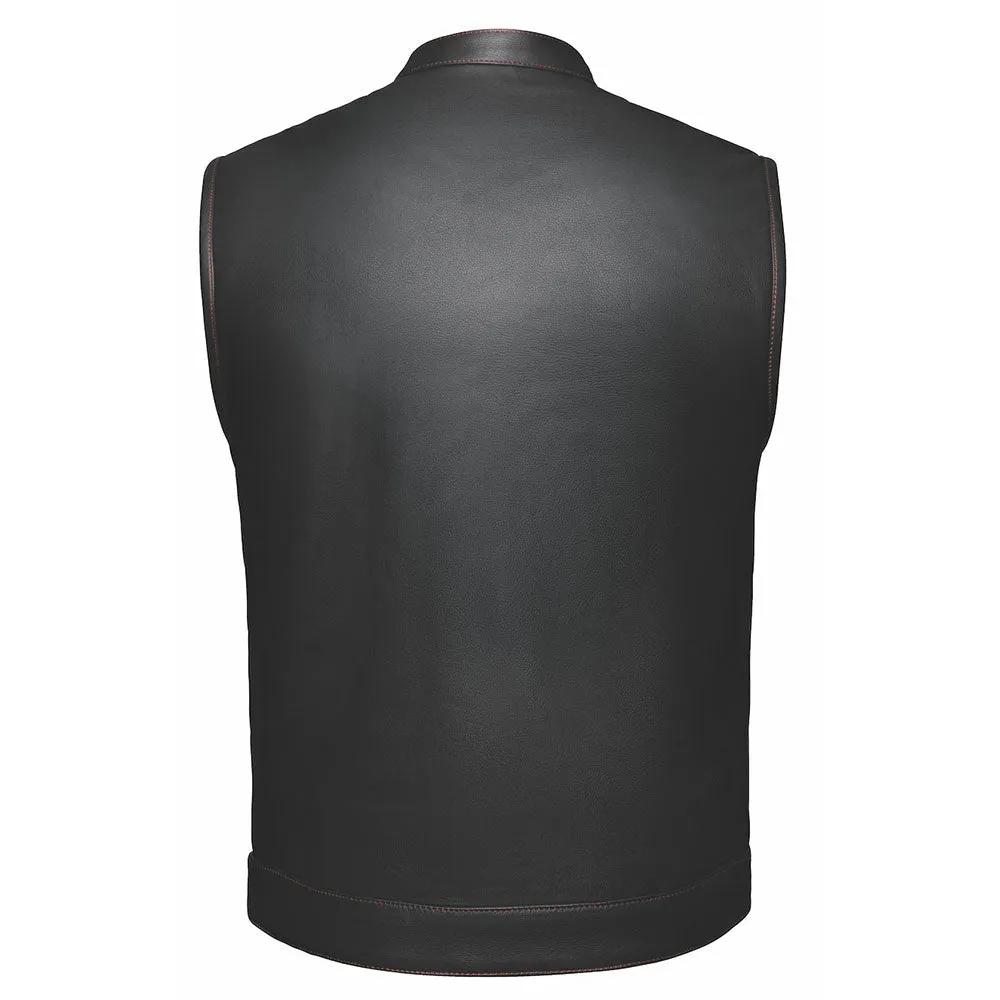
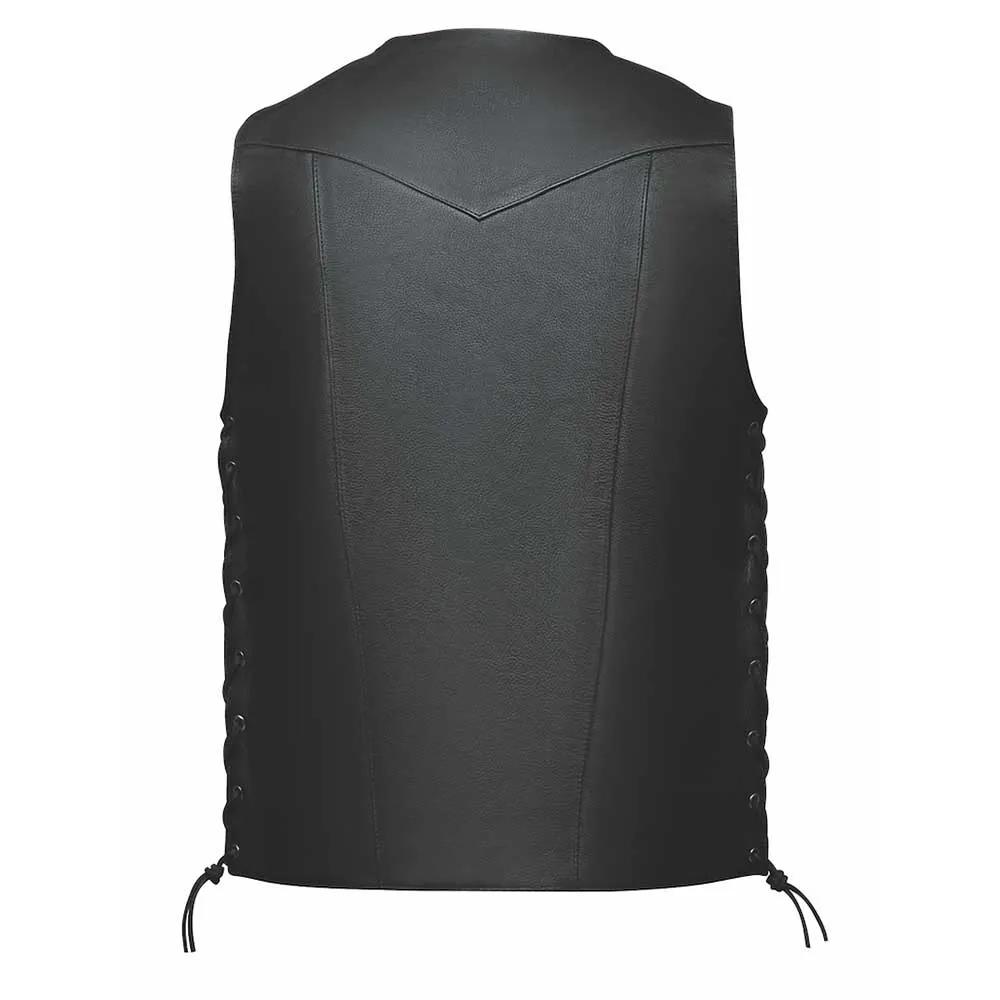
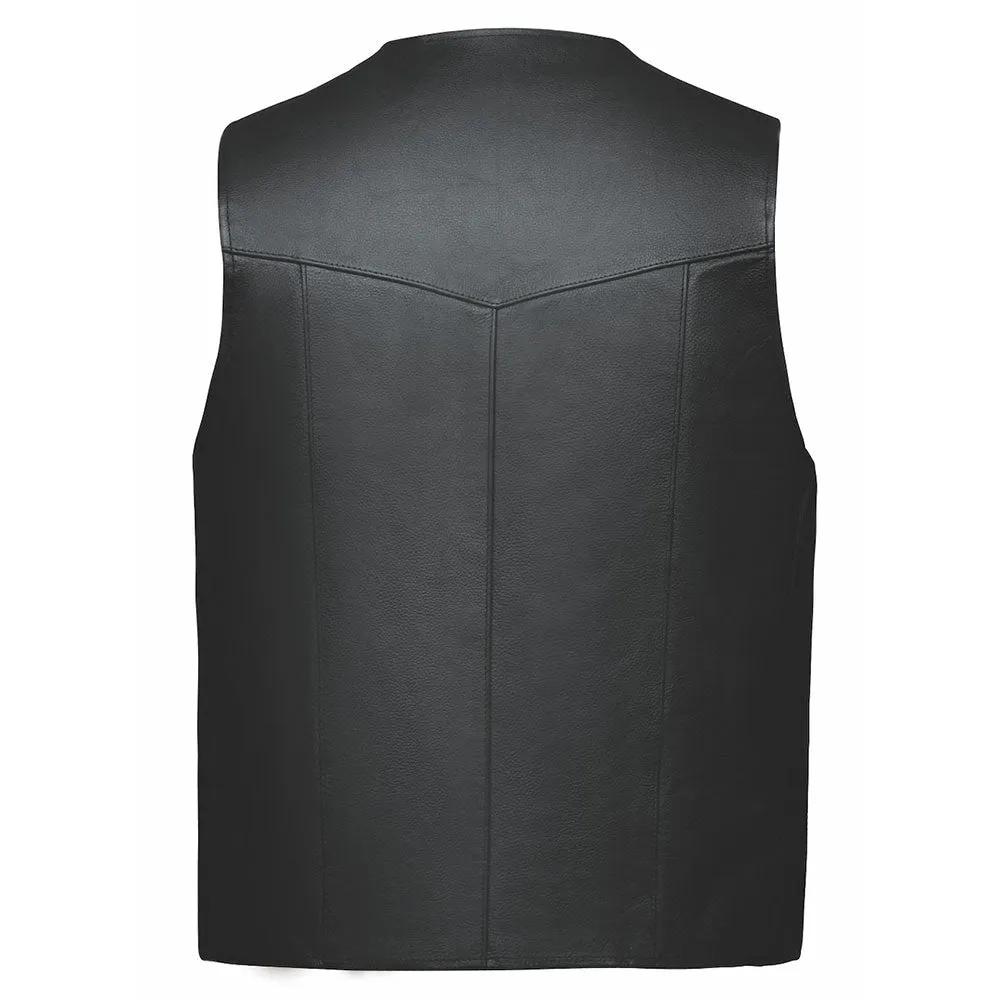
Single-piece construction with no vertical centre seam is non-negotiable if you are building a full three-piece patch set. Check product descriptions and confirm the panel dimensions against your specific patch sizes if you are working with oversized artwork.
Identify any additional features needed:
Armour pocket for spine protection insert, side lacing for adjustable fit, extended back length, specific lining material. Know what you need before browsing so you are filtering by function rather than appearance alone.
What Type of Leather Is Best for a Motorcycle Vest?
Full-Grain Cowhide: The outer surface of the hide is left intact, which preserves the natural grain structure that gives the leather its density and abrasion resistance. This is the most protective and most durable option. It starts firm and softens gradually to conform to your body. Most riders rate full-grain cowhide as the best all-around choice for motorcycle leather because it balances toughness, break-in, and longevity better than any alternative. Unik uses 1.0 to 1.3mm cowhide across our standard collection.
Buffalo Leather: Denser and heavier than cowhide with a more pronounced surface grain. Takes longer to break in but develops a distinctive character with wear. Ideal for riders who prioritize toughness above all else and are willing to put in the break-in time. Offers excellent resistance to abrasion and holds its shape well over years of use.
Lambskin: Lightweight and immediately soft with a smooth hand feel. Breaks in from the first time you wear it. Trades some abrasion resistance for comfort, making it the preferred choice for riders who prioritize all-day wearability over maximum protection. Best suited for shorter rides, off-bike use, and warmer conditions.
Drum-Dyed Leather: A dyeing process where the hide is tumbled in a drum with dye rather than surface-coated. The colour penetrates the full thickness of the leather, which means scratches and scuffs reveal the same tone underneath rather than exposing undyed hide. Drum-dyed leather has a more matte, natural appearance and ages particularly well.
How Unik Builds Every Men's Leather Motorcycle Vest
The difference between a vest that lasts two seasons and one that lasts two decades is decided during construction, before you ever see the finished product. Here is what goes into every vest we make.
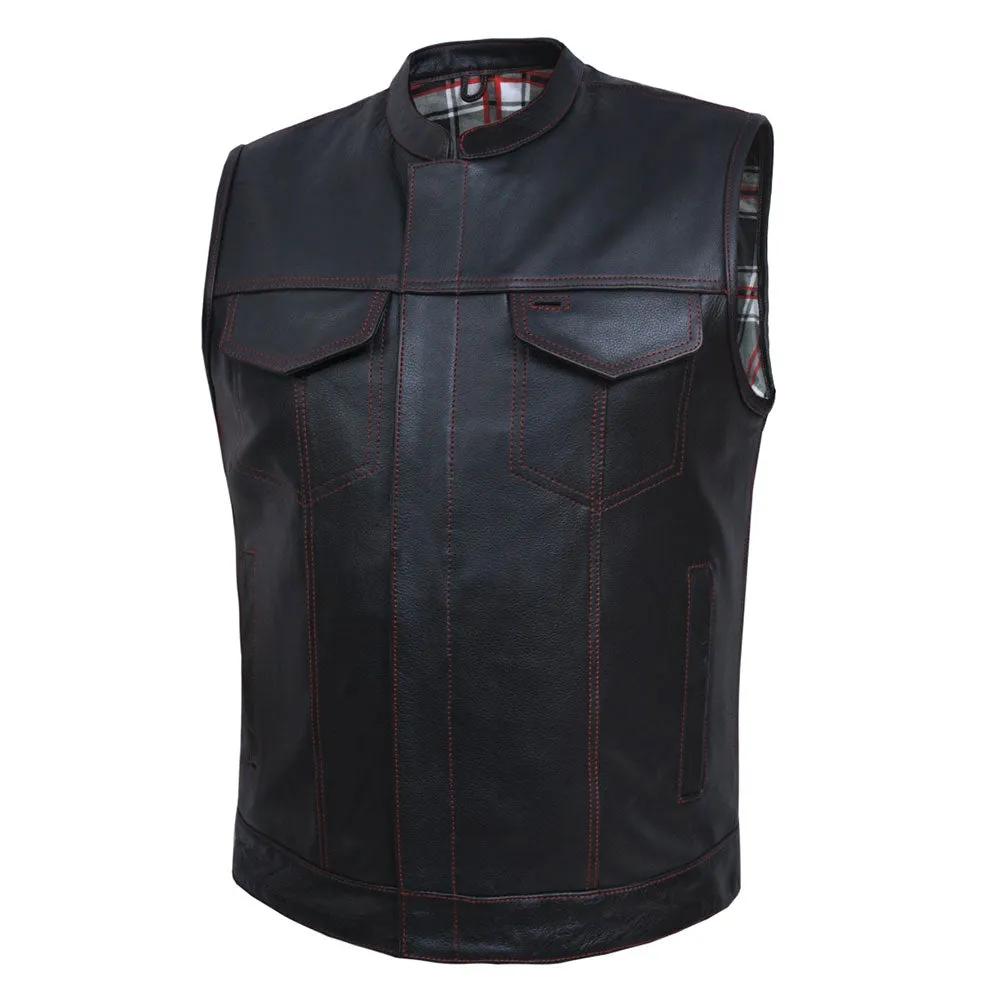
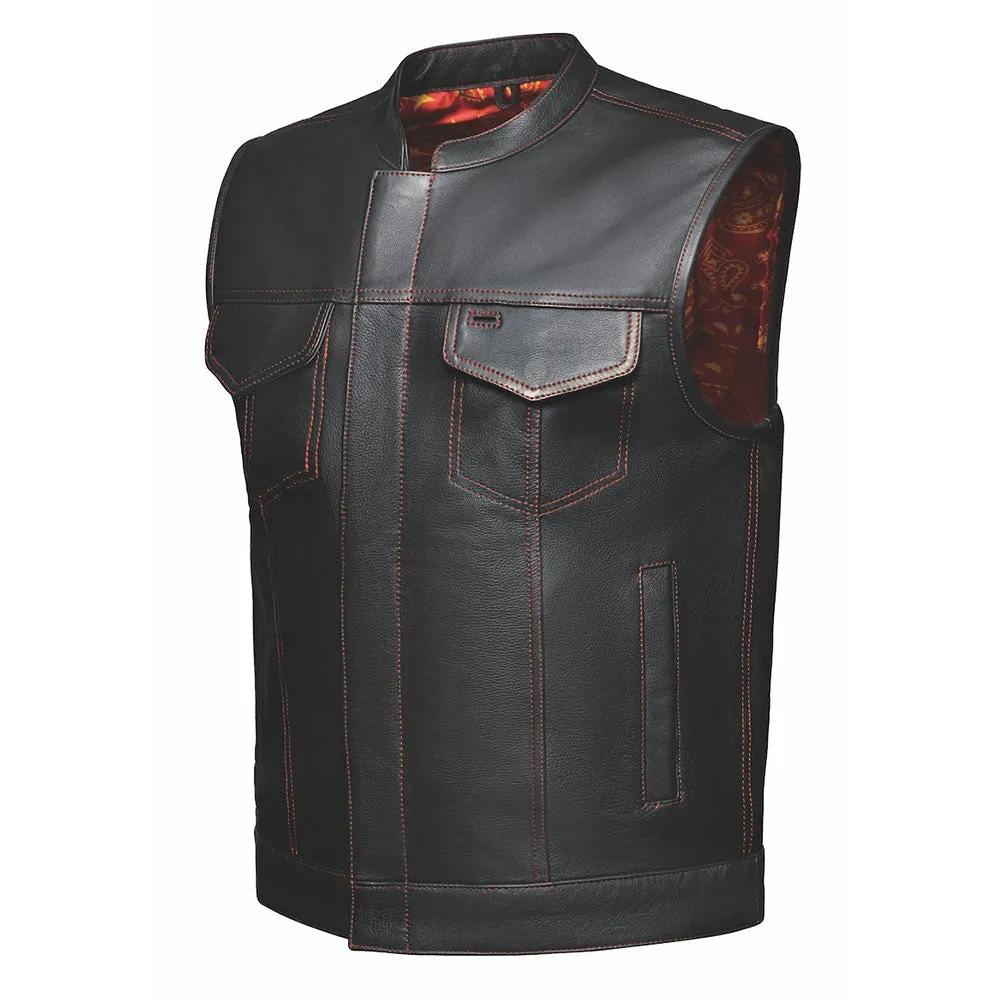
The Stitching: Stress points get double and triple thread passes. Shoulder seams, armholes, side panels, and every pocket opening are anchored deep. These are the exact locations where lower-quality construction fails first. Our stitching is designed to outlast the leather around it.
The Hardware: Every snap, zipper, and buckle is solid metal. YKK zippers run smooth through years of daily use. Hardware finishes include antique brass, chrome, gunmetal, and matte black depending on the style. Nothing plastic, nothing lightweight alloy, nothing that fails after one hard season.
The Pockets: Exterior chest pockets, interior wallet slots, phone-width compartments, and concealed carry pockets on selected styles. Every pocket position and size is determined by real riding use. Storage that only makes sense in the showroom gets cut from our patterns.
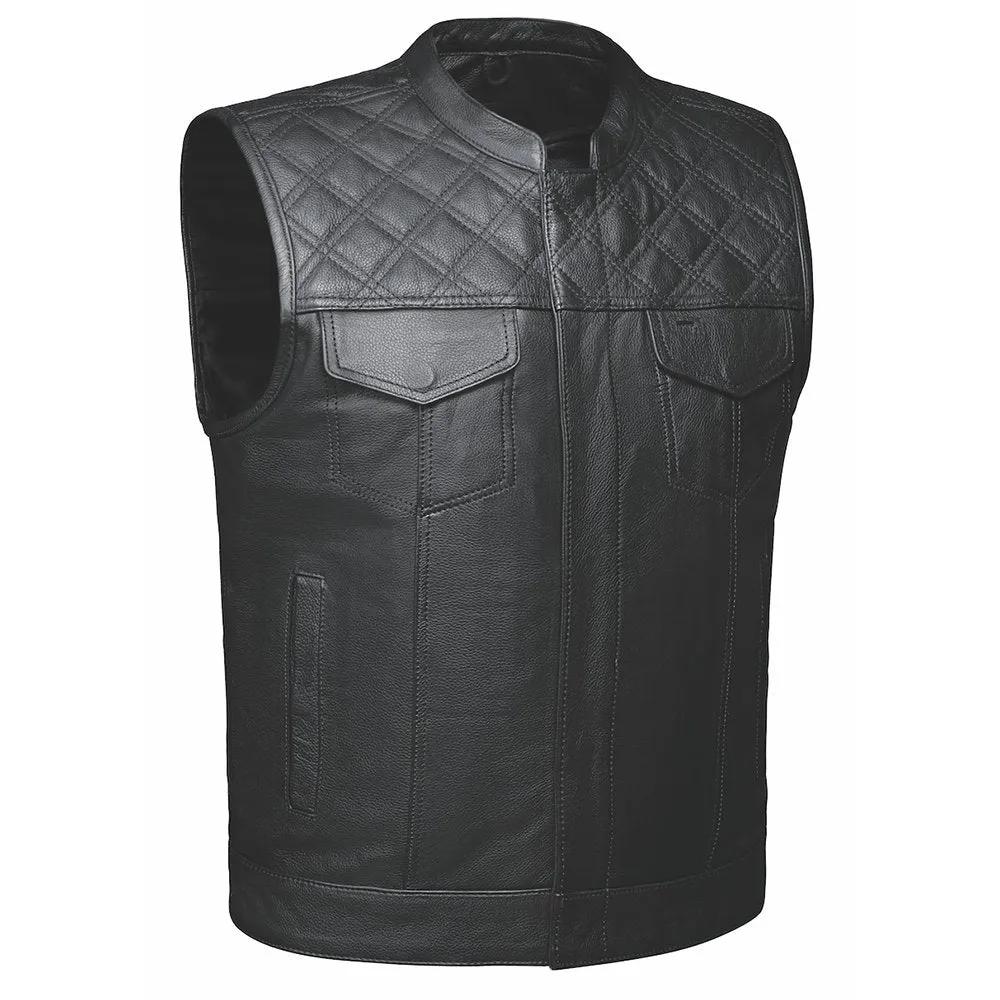
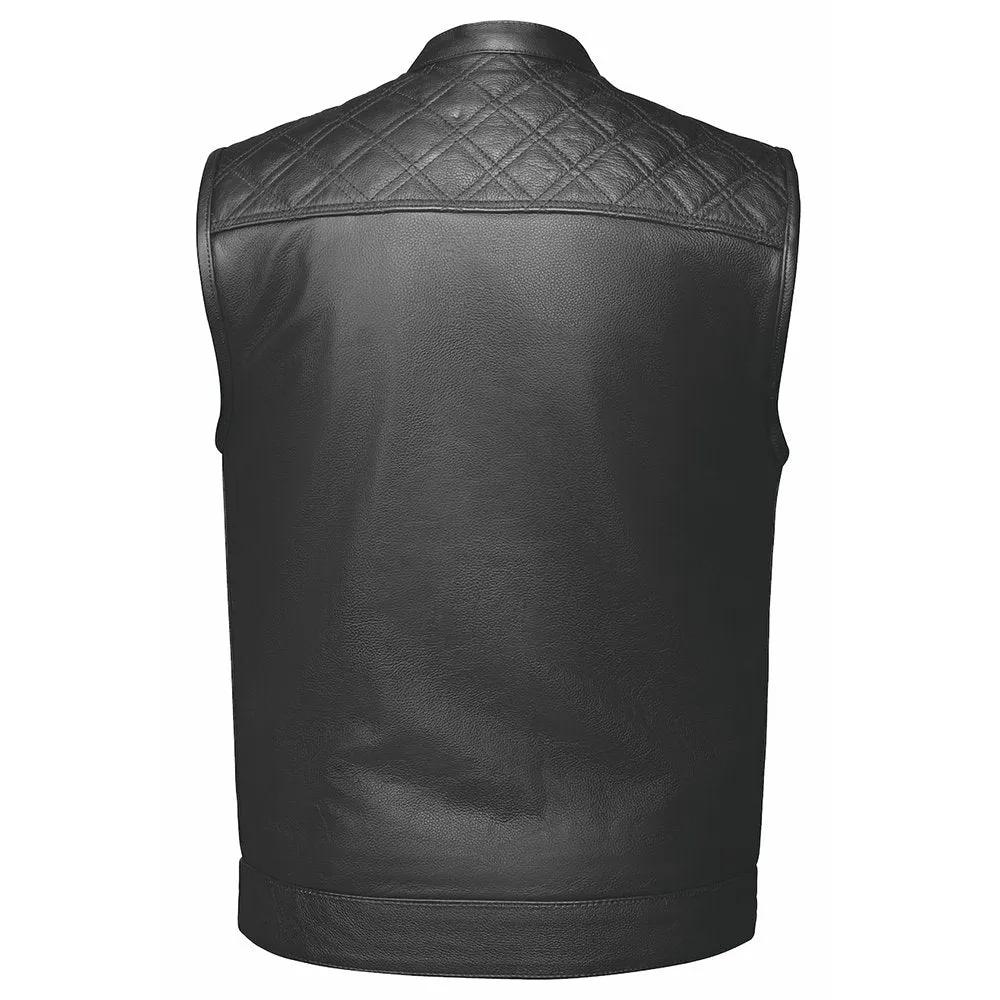
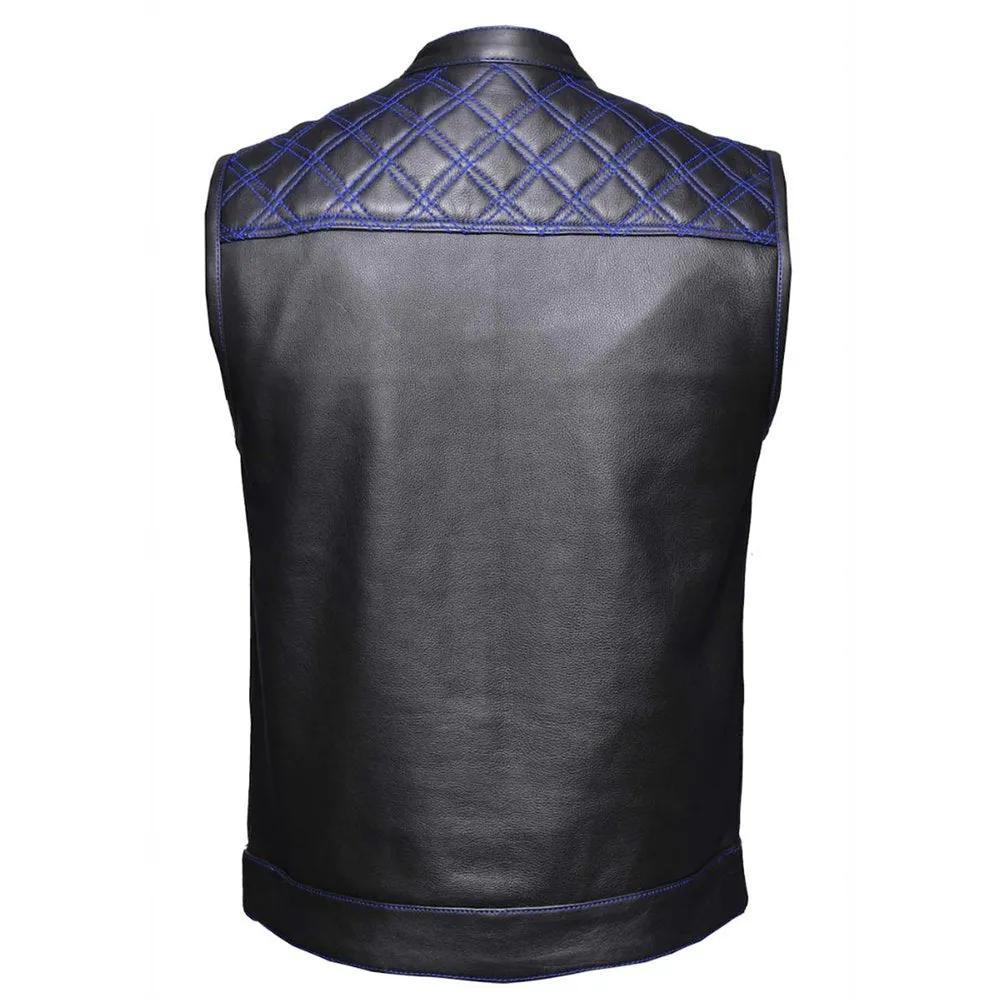
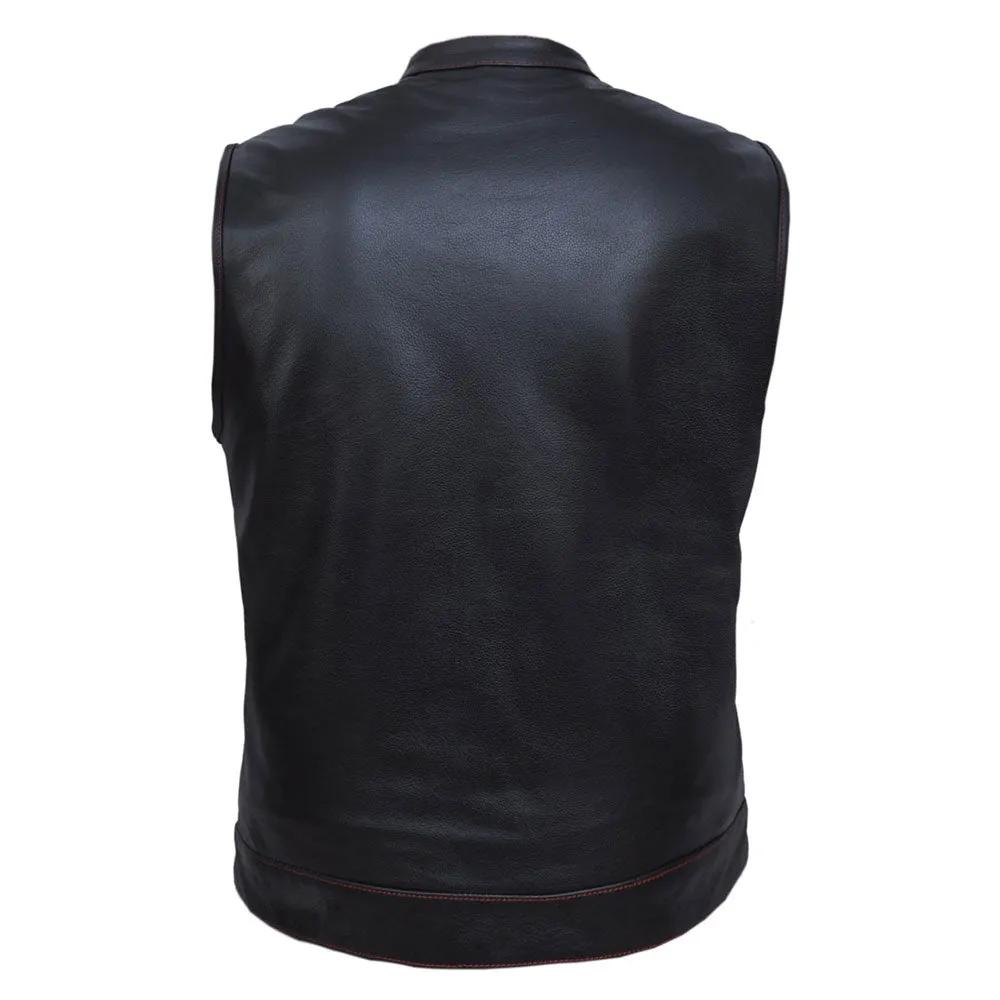
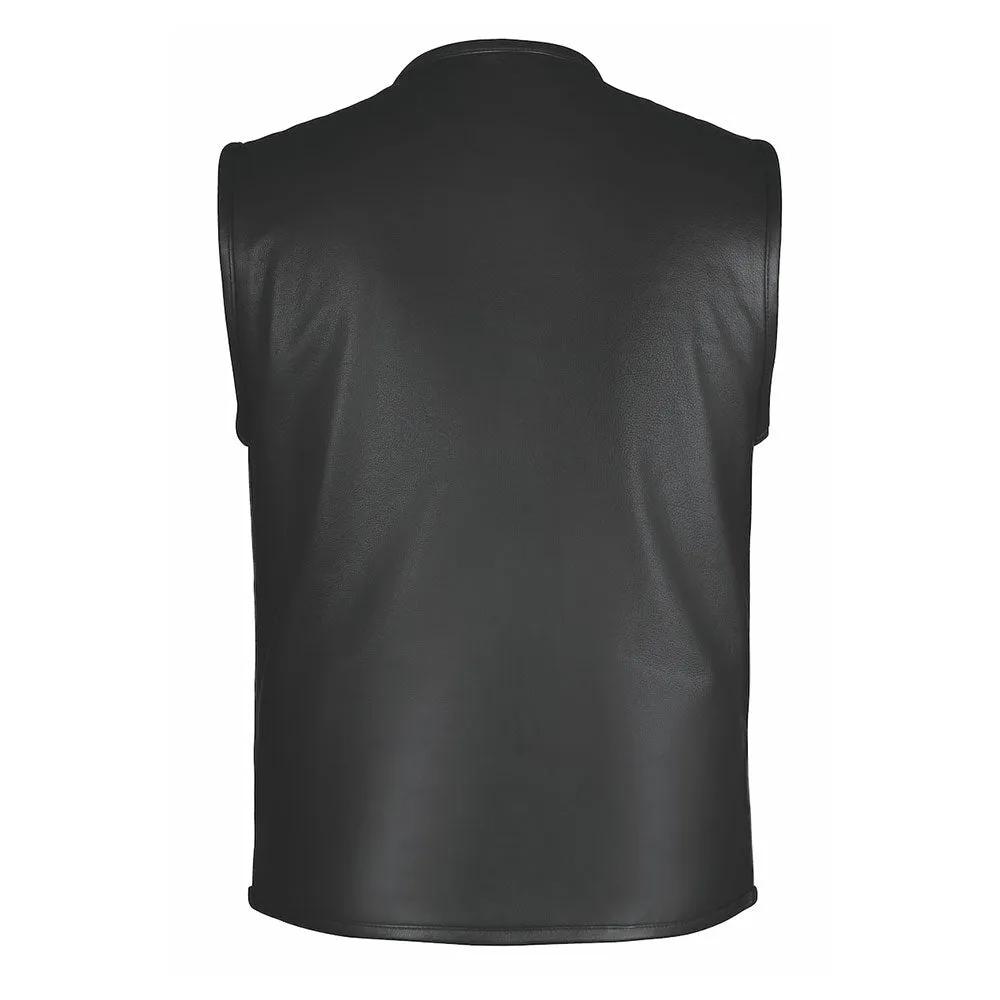
The Back Panel: A single uncut panel with no centre seam running vertically through it. This is the construction standard that any vest meant to carry a full patch set requires. The surface is clean, flat, and large enough for top and bottom rockers and a full centre patch with proper spacing between each element.
The Cut: Sleeveless with an extended back length that stays tucked when leaned forward over the bars. Armholes are sized for full shoulder mobility without binding. There is room underneath for a base layer, flannel, or hoodie without losing the vest shape.
The Size Range: S through 8XL across most styles. Check the individual product size chart before ordering. When layering underneath, size up by one.
Every Style in Our Men's Leather Vest Lineup
Riders come to Unik with different requirements. Some are building a club kit from scratch. Some want summer ventilation. Some want something that transitions naturally off the bike. We build for all of them.
Club Style Vests
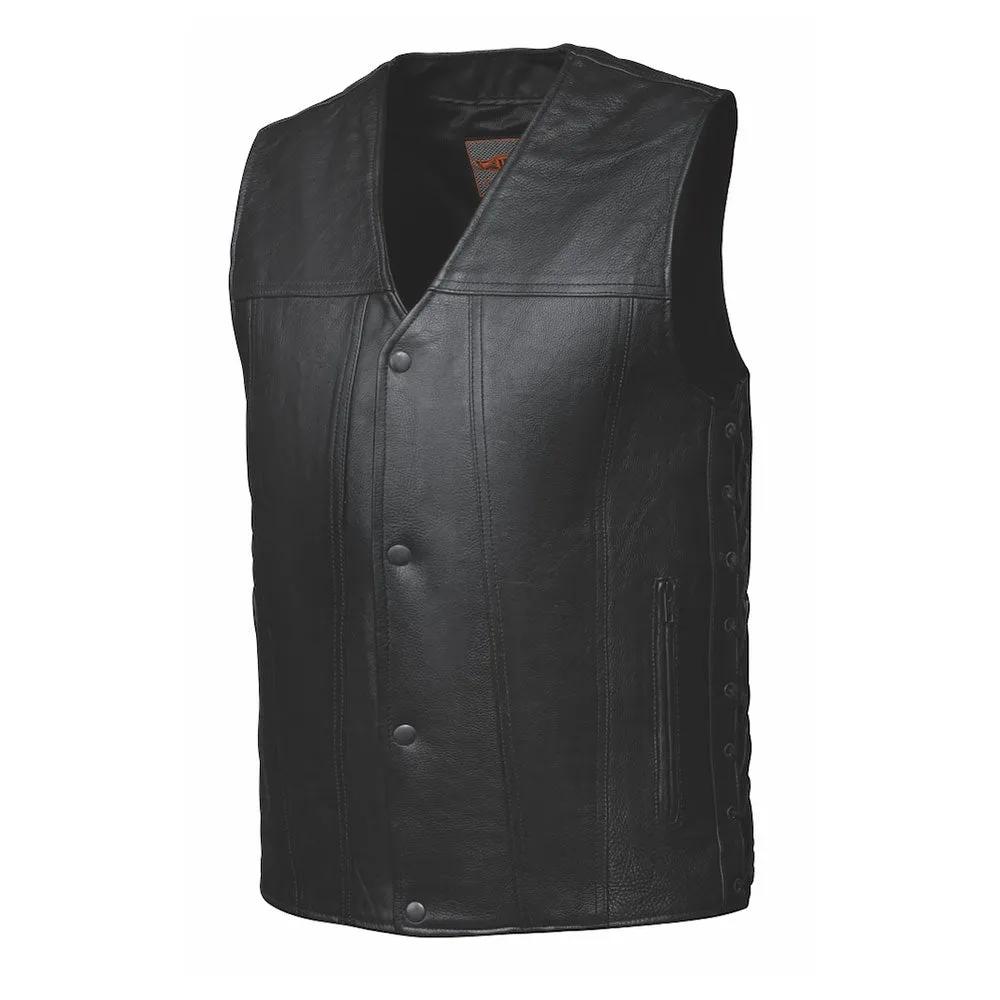
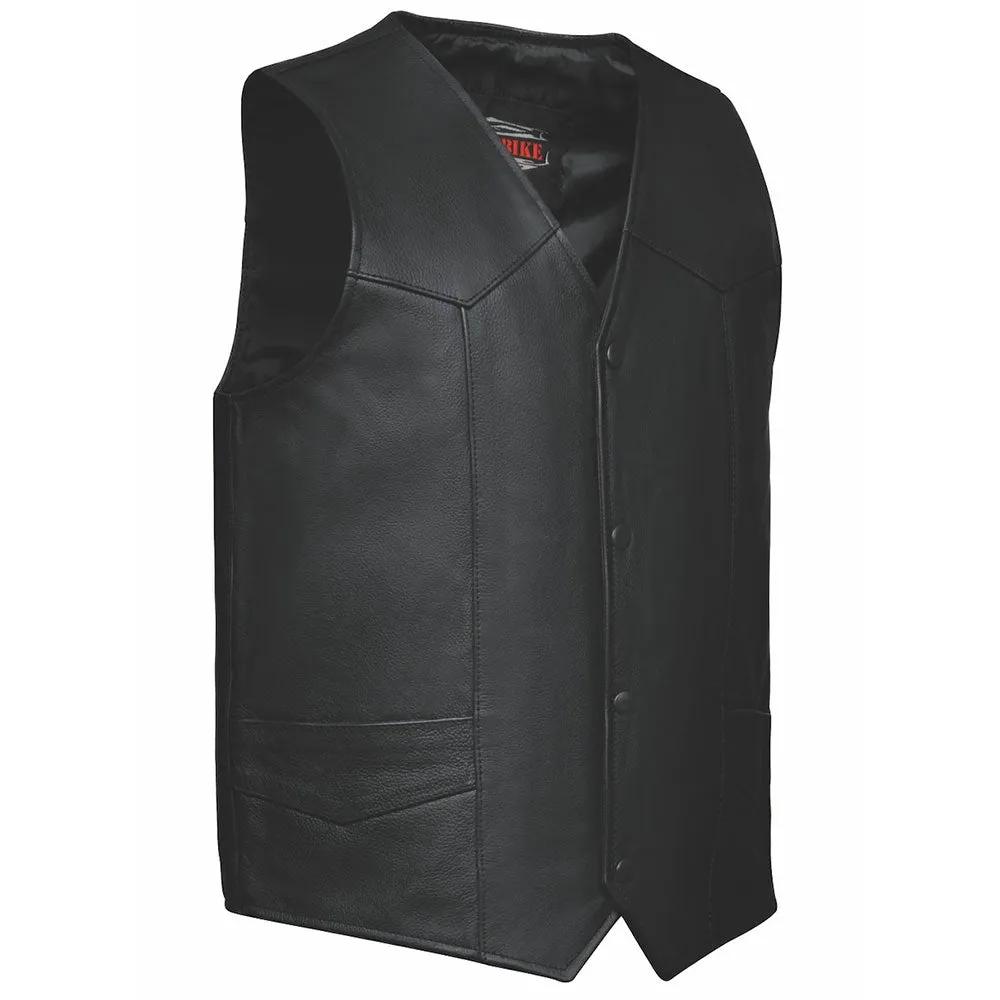
The foundation of our lineup and the most popular style in the collection. A proper club vest carries a clean silhouette, covered snaps, a one-inch or rolled collar, and a single uncut back panel. The cut is shaped for riding posture. These vests are patch-ready from the moment you take them out of the bag and built for the kind of use that comes with run days, rally weekends, and years of chapter rides.
Concealed Carry Vests
Built for licensed carriers who need secure, fast access on the road. Interior holster pockets are positioned on both sides of the vest body and secured with zipper or snap closures depending on the style. The exterior profile stays clean. These vests meet the functional requirements of riders who carry every day without sacrificing the look of a standard leather vest.
Perforated Leather Vests
The same genuine leather construction as our standard vests, with precisely punched ventilation holes across the torso panels. On a summer run, moving air channels through the perforations and against your body, reducing heat build-up significantly compared to solid leather. Riders who switch to perforated for summer months typically run them from May through September before returning to solid leather for fall riding.
Distressed and Vintage Finish Vests
Leather with a worn character applied by hand before the vest ever reaches you. The distressing changes subtly from piece to piece, so no two look exactly alike. These are for riders who want a vest with texture and visual history from the first day, without the years of riding it normally takes to develop it in a plain hide.
Side Lace Vests
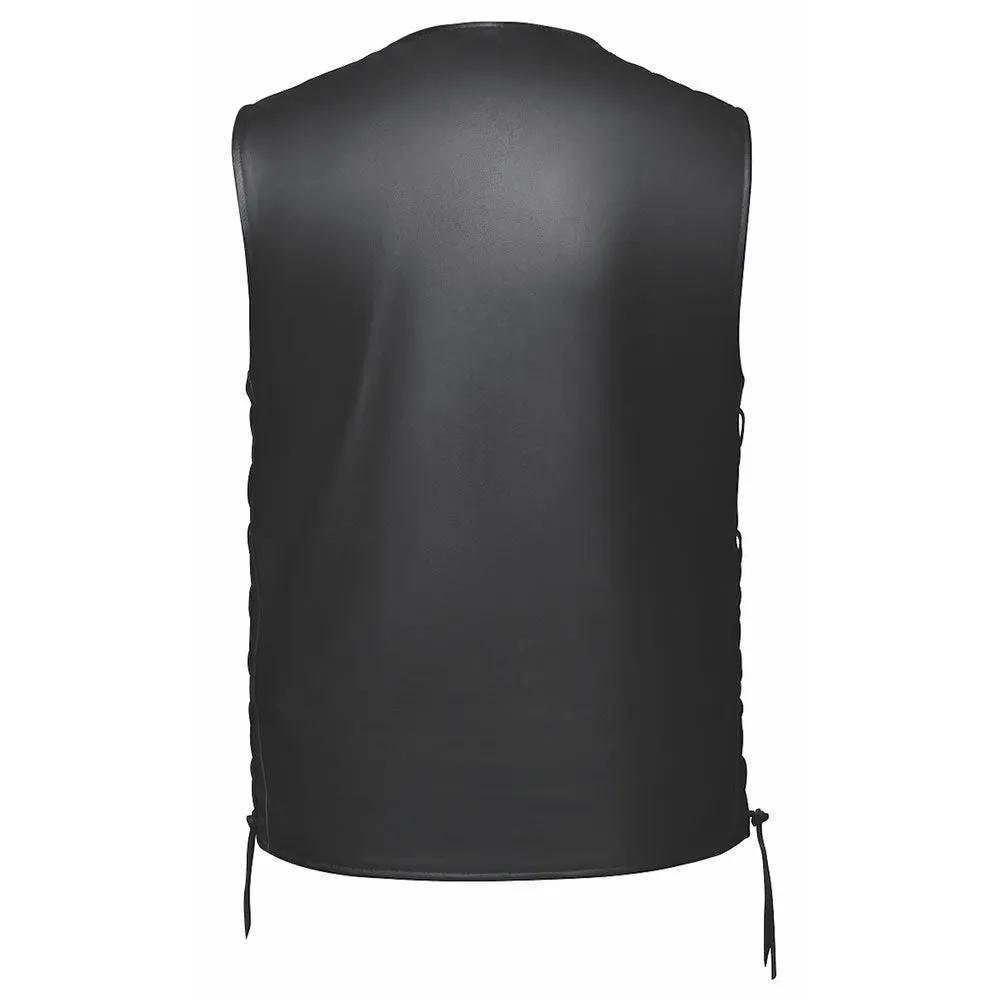
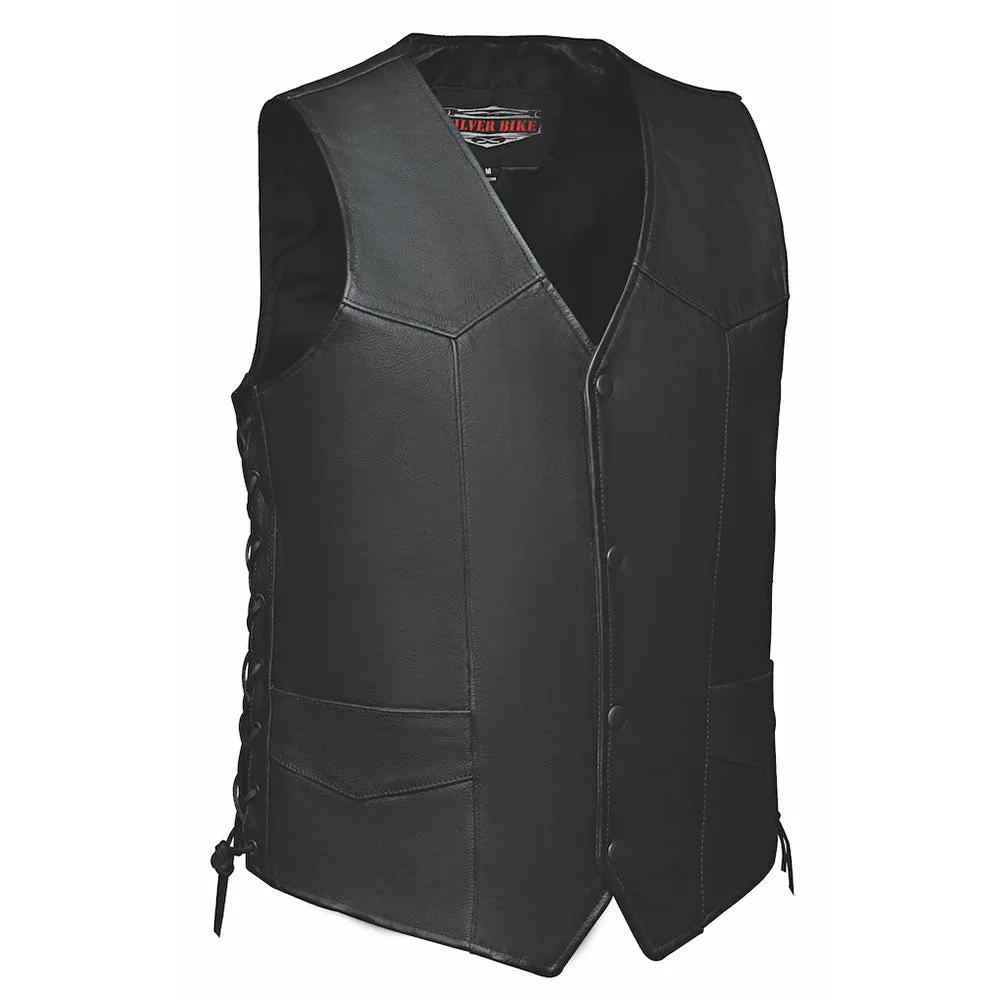
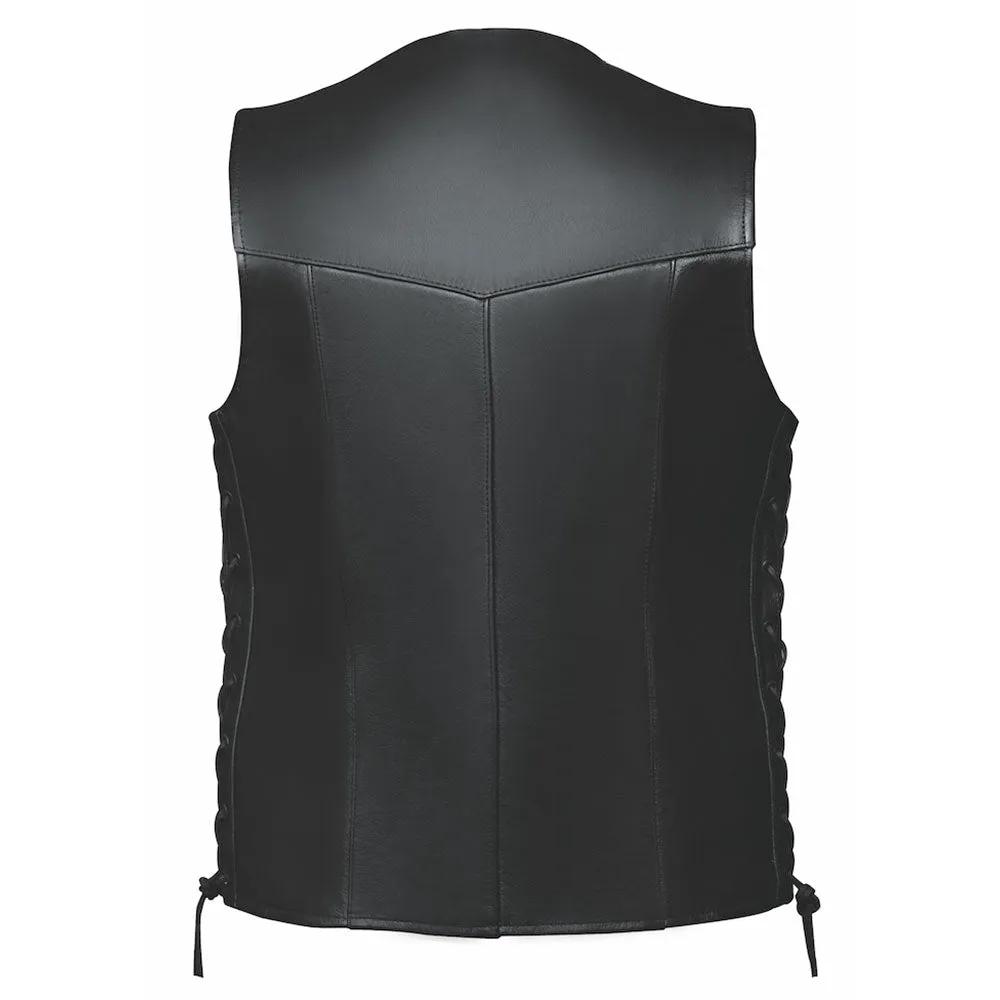
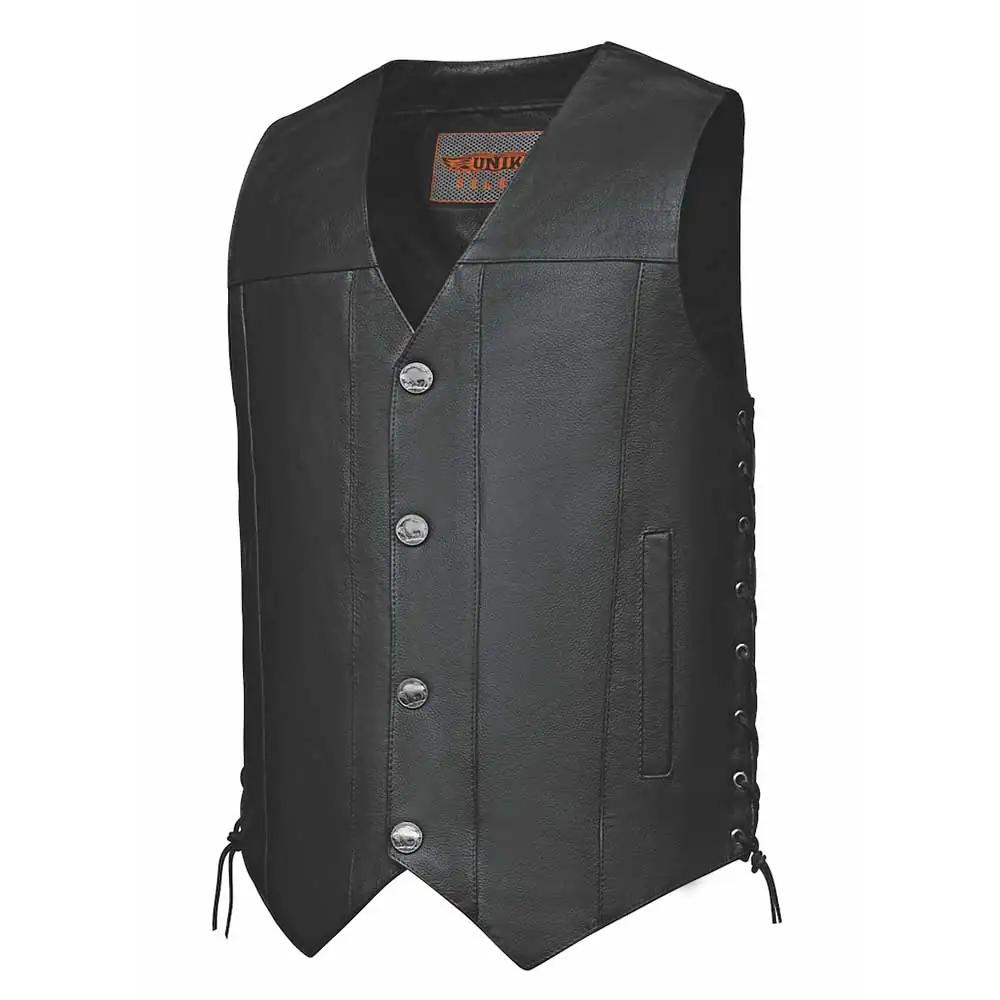
Lacing runs down both side panels and adjusts to tighten the fit for solo riding or loosen for layering a flannel or hoodie underneath. This single feature extends the usable temperature range of one vest considerably and also allows riders whose chest and waist measurements differ from standard vest proportions to dial in a more tailored fit.
Plain and Minimalist Vests
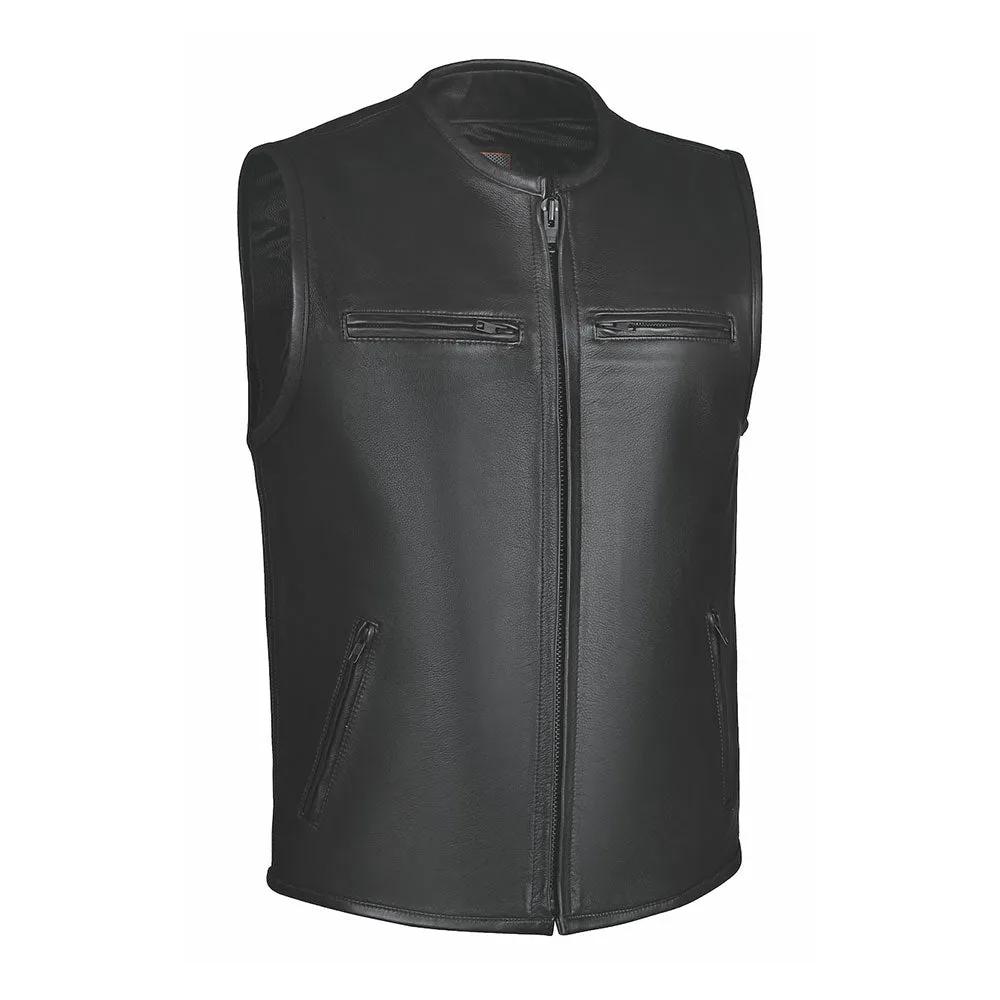
No embroidery, no decorative hardware, no fringe. A clean cut, genuine leather, and construction that speaks for itself. These pair particularly well with heavy patch builds because the leather does not compete with the artwork. They are also the preferred choice for riders who want gear that looks equally at home on the bike and off it.
Leather and Denim Hybrid Vests
Leather panels at the shoulders and stress points combined with denim construction through the body. The result is a lighter vest with a more casual silhouette that still has the structure and durability of a real riding garment. Popular with riders who move between saddle and off-bike settings throughout the day and want a vest that reads naturally in both.
Why Riders Choose Leather Vests Over Every Other Option
Leather has been the dominant material in motorcycle gear for over a century. That is not tradition. That is a performance track record that no synthetic material has managed to match across the full range of demands riders place on their gear.
Abrasion Resistance: In a fall, full-grain leather resists road contact better than any natural or synthetic fabric available at a comparable price point. The thickness of the hide determines how long it takes to wear through in a slide. Motorcycle-grade leather in the 1.0 to 1.3mm range provides meaningful protection across the chest and torso in low to moderate speed incidents.
Wind and Debris Protection: At highway speed, wind across an unprotected chest drains body heat and causes fatigue on long rides. A leather vest seals that gap without the weight or restriction of a full jacket. It also keeps gravel, insects, and road debris off your torso on open stretches.
Core Temperature Management: A leather vest traps core heat when temperatures drop and blocks wind chill on cold morning rides. Worn over a moisture-wicking base layer in summer, it protects without overheating. Worn over a flannel in fall, it extends the riding season by several weeks on either end of summer.
Full Arm Mobility: The sleeveless cut removes every restriction a jacket sleeve creates at the shoulder joint. Long hours in the saddle, aggressive lean angles, and demanding bar inputs are all easier without fabric binding at the shoulder. Riders who switch from a jacket to a vest for summer notice the difference on the first ride.
Patch and Identity Canvas: No other garment in a rider's kit carries personal history the way a vest does. Club colours, chapter rockers, memorial patches, and personal artwork accumulate over years of riding. The single-panel back panel gives you an uninterrupted surface built for exactly this purpose.
Decade-Scale Durability: Quality leather does not degrade the way synthetic materials do. It does not peel, crack at the seams, or lose structural integrity after a few seasons of regular use. With basic maintenance, a well-built leather vest improves with time as the hide conforms to your body.
How to Style a Men's Leather Motorcycle Vest
A leather vest is a versatile garment that reads differently depending on what you pair it with. These are the combinations riders actually use.
Classic Biker: Club vest over a black or white short-sleeve tee, straight-leg denim, and engineer or harness boots. This combination has defined motorcycle culture for 60 years because the vest carries the visual weight and everything else gets out of the way.
Full Patch Kit: Club colours on the back, chapter rocker above and below, centre logo front and centre. Worn with pride at rallies, runs, and chapter meetings. At this point the vest is a statement of identity first and a garment second.
Layered for Cold Weather: Vest over a heavyweight flannel or zip-up hoodie. The leather handles wind, the layer underneath handles temperature. This works reliably from the mid-50s down through early autumn conditions without needing a full jacket.
Summer Ride Setup: Perforated leather vest over a moisture-wicking base layer, riding jeans, and low boots. Moving air passes through the perforations and keeps core temperature manageable on long summer runs. The right combination for rally weekends in warm climates.
Casual Off-Bike: A clean minimalist vest over a Henley, dark fitted denim, and Chelsea or work boots. The same garment that sits on the bike transitions into bar, concert, or weekend settings without looking out of place.
What Do Men's Leather Motorcycle Vests Cost?
Our collection spans from $69.99 entry-level builds to $200 and above for premium handcrafted styles. Every price point uses genuine leather. The difference between tiers is leather grade, feature count, hardware quality, and construction detail.
At the entry level, vests like the Bronco and Cattleman start at $69.99. Solid cowhide construction, concealed carry pockets, and clean hardware at a price that makes a first leather vest achievable for any rider.
At the premium end, styles like the Kingsnake deliver 1.1 to 1.2mm naked cowhide leather with dragon-print detailing, black and gold arm braiding, satin lining, a back armour pocket, and full concealed carry capability. These are built for riders who have specific requirements and are willing to pay for precision.
Prices and sale discounts change regularly. Check the current price on each product page before ordering.
What Moves the Price of a Leather Vest Up?
Leather Grade: Full-grain and top-grain hides cost more to source and process than corrected-grain or split leather. The difference shows in how the vest feels when new, how it breaks in over time, and how long it holds up under real riding use.
Feature Set: Concealed carry pockets, YKK hardware, reinforced panels, armour pockets, and specialty linings each add to the cost of building the vest. More functional features means a higher build cost.
Custom Construction: A vest ordered through our custom builder is priced individually based on the leather type, hardware choices, stitching colour, lining, pocket configuration, and any specialty details. Every custom vest is quoted before production begins.
How to Clean and Care for a Men's Leather Motorcycle Vest
Leather responds well to basic maintenance and poorly to neglect. The good news is that proper care takes almost no time and extends the life of your vest by years.
After Every Ride: Wipe the exterior with a clean dry cloth or a slightly damp one to remove surface dust, road grime, and any moisture that has settled into the hide.
When the Vest Gets Wet: Hang it on a wide-shouldered hanger in a well-ventilated space and allow it to air dry completely before storing it. Never accelerate drying with a heat gun, hair dryer, or direct sunlight.
Conditioning Schedule: Apply a leather conditioner formulated specifically for motorcycle leather two to three times per year. Work the conditioner evenly across the entire surface including the back panel and any embossed or textured areas. Allow the vest to sit for 24 hours before wearing so the conditioner absorbs fully.
Long-Term Storage: Condition the vest before putting it away for an extended period. Hang it on a wide hanger inside a breathable garment bag. Avoid plastic covers, which trap humidity against the leather. Keep it away from direct light and areas with significant temperature swings.
Motorcycle Vest vs Jacket: Which One Do You Actually Need?
This is one of the most common questions riders ask when building out their gear kit. The honest answer is that they serve different purposes and most serious riders eventually use both.
When a vest is the right call: Warm weather riding when a full jacket traps too much heat. Riding in your local area where shorter distances reduce crash risk exposure. Club or rally settings where displaying your patch set matters. Off-bike wear where a jacket would look out of place.
When a jacket is the right call: Highway riding at sustained speed. Cold weather where a vest alone does not provide enough coverage. Riding situations with elevated crash risk where arm and shoulder protection matters most.
When both makes sense: Many riders layer a vest over a textile or mesh jacket for warmth, extra pockets, and patch display simultaneously. The vest handles identity and extra storage. The jacket handles structured protection and weather management.
At Unik, our leather vests are built specifically for riders who need a gear that performs on the road, not just looks good in the parking lot. If you need a full jacket as well, our men's leather motorcycle jacket collection is built to the same standard.
Why Riders Have Been Buying From Unik Since 1985
At Unik International, we started crafting motorcycle leather riding gear in 1985. That history is reflected in how we cut our patterns, where we apply stress stitching, and which hardware we specify.
Every leather vest we sell is covered against manufacturing defects for the life of the garment. If stitching fails, hardware breaks, or the leather fails due to a production issue, we take responsibility. You ride hard. Your gear should back you up.
What Every Unik Purchase Includes
Handcrafting Since 1985: Four decades of motorcycle leather knowledge in every pattern, seam, and stitch.
2 Years Warranty: Every leather vest is covered against manufacturing defects for the life of the garment. It fails, we fix it. No questions asked.
Free US Shipping: Zero shipping cost on all US orders over $99.
30-Day Money-Back Guarantee: If the fit is off or you change your mind, return it within 30 days for refund.
Want a Men’s Custom Motorcycle Leather vest?
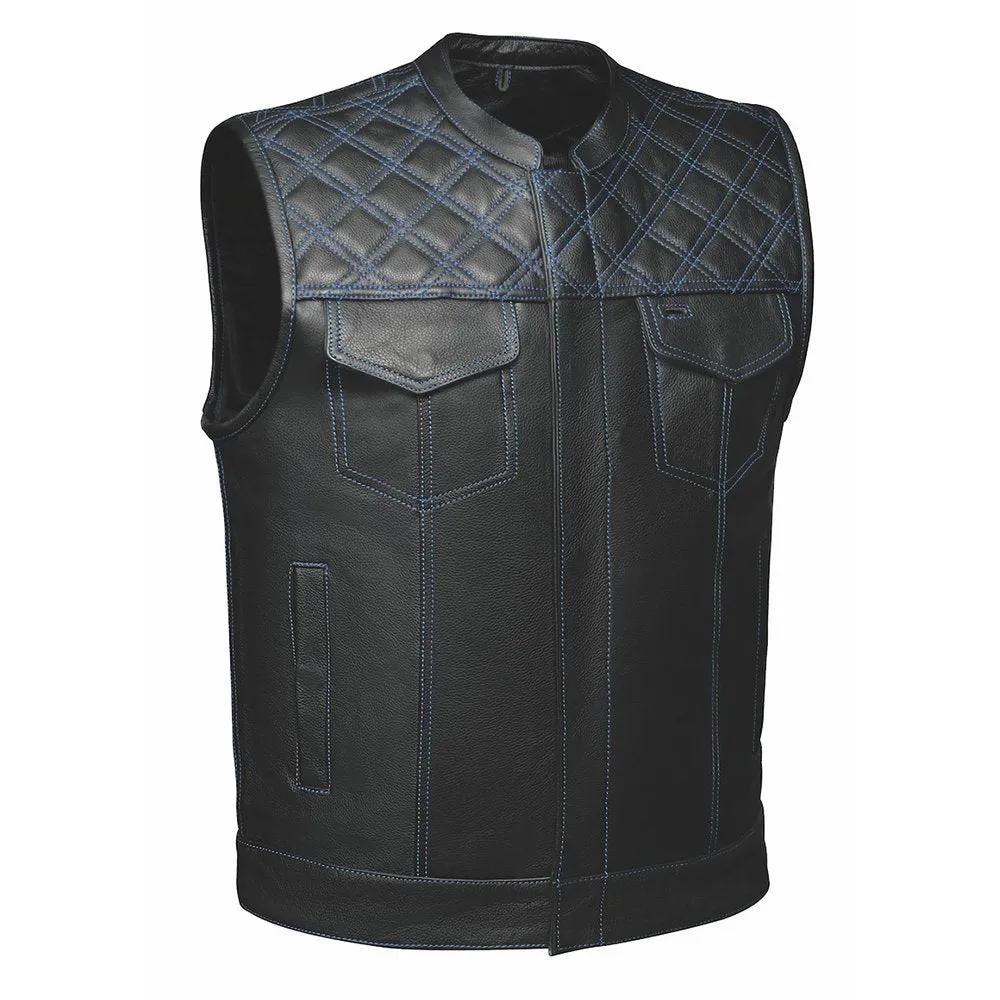
Cannot find exactly what you want? Build your men’s custom motorcycle leather vest from scratch. Our Custom Builder gives riders direct control over the construction of their vest. Choose the leather type and colour, hardware finish, stitching colour, collar style, pocket configuration, and interior lining. The result is a vest built around your specifications and your riding identity.
Frequently Asked Questions:
What protection does a leather motorcycle vest provide on the road?
A leather motorcycle vest protects your chest, torso, and core from wind, road debris, and abrasion in a fall. Full-grain cowhide at 1.0 to 1.3mm thickness is the best non-armoured protection available for that part of your body. It will not replace the shoulder and elbow coverage of a full jacket, but for torso protection it outperforms every natural material and most synthetics at a comparable price.
Are leather motorcycle vests good for summer riding?
Yes, with the right style selection. Perforated leather vests are specifically engineered for summer riding. The ventilation holes punched across the torso channel moving air against your body as you ride, reducing the heat build-up that makes solid leather uncomfortable in warm weather.
Can I wear a leather vest over a jacket?
Yes, and many riders do exactly this. Layering a vest over a textile or mesh jacket gives you additional storage pockets, a surface to carry club patches, and extra core warmth on colder rides.
How should a men's leather motorcycle vest fit?
Shoulders should sit flat across the shoulder joint without pulling or bunching. The chest should feel snug but allow a full breath without restriction. The back panel should extend far enough to stay tucked when you lean forward at your natural riding posture. Armholes should allow full arm movement without binding at the shoulder. Leave enough room to layer a base layer comfortably underneath. If you plan to layer a flannel or hoodie, add two inches to your chest measurement when selecting size.
Do leather vests stretch over time?
Genuine leather does not stretch in the way fabric does, but it does break in. Full-grain cowhide and buffalo leather will soften and mould to your body with wear, which can create a slightly more relaxed fit over months of use.
Can I add patches to a leather motorcycle vest?
Yes. Leather holds stitching securely and is the standard material for patch display in motorcycle culture. Our vests are built with single-piece back panels that have no vertical centre seam, giving you a clean, uninterrupted surface for full three-piece club sets, top and bottom rockers, and centre patches.
Can I customize a Unik leather vest completely?
Yes. Our custom builder lets you specify the leather type, colour, hardware finish, stitching colour, collar style, pocket layout, and interior lining from scratch. Every custom motorcycle vest is produced individually to your confirmed specifications and handmade to order.
What is the difference between motorcycle leather and fashion leather?
Motorcycle leather is graded by thickness, typically 1.0mm and above, and constructed for abrasion resistance. Genuine full-grain hides selected for density rather than appearance. It uses reinforced stitching at stress points, solid hardware rated for regular mechanical operation.
Fashion leather prioritizes surface appearance, color vibrancy, and lightweight feel. It typically uses thinner hides, bonded or split leather in lower-priced products, and hardware chosen for looks rather than function.
Are Unik men's leather vests available in colours besides black?
Yes. Our collection includes brown, tan, distressed grey, antique finishes, and two-tone combinations across various styles. If you want a specific colour in a style that is currently only offered in black, our Custom Builder allows colour selection as part of the build process.
How long does shipping take for Unik vests?
Standard US orders ship within 1 to 3 business days from our warehouse and typically arrive within 5 to 7 business days after dispatch. Custom-built vests require additional production time before shipment begins. You will receive tracking information by email once your parcel leaves the warehouse.
What does the Unik lifetime warranty cover?
Our lifetime warranty covers manufacturing defects in materials and workmanship on all leather items, including stitching failure, hardware defects, and leather delamination caused by production issues. If a covered defect is confirmed after inspection, we repair or replace the item.
How do I measure myself for a leather motorcycle vest?
Measure your chest at the fullest point, wrapping the tape measure horizontally just under your arms across the widest part of your chest. Keep the tape level around your back. Record the measurement in inches and compare it against the size chart on the specific product page you are ordering from. If you plan to layer a flannel, hoodie, or other garment underneath the vest during riding, add two inches to your chest measurement before selecting your size. For any sizing questions specific to a particular style, contact our team directly.
How often should I condition a leather motorcycle vest?
Two to three times per year is the standard recommendation for a vest that sees regular riding. Riders in dry climates or who ride year-round may condition three to four times yearly.
How Long Does a Men's Leather Motorcycle Vest Last?
A leather vest built from full-grain cowhide or buffalo leather with quality stitching and solid hardware, and maintained properly, can last 20 to 30 years of regular riding use. Some riders pass their vests to the next generation.